
THE BOOK
It reads your structured data, your response times and your return policy, and then it decides — somewhere you cannot watch.
It is already buying. How much it will buy by 2030 is a projection, and this book treats it as one.
Selling to Agents is written for merchants who have to act before the answer is in.
Ten chapters, two appendices, a glossary, and a checklist you can hand to whoever runs your store. Not a book for the analyst who will describe this in two years.
It applies whether you run an Italian fashion brand trying to understand what is changing, a US electronics company that needs to make the case to a puzzled board, or a DTC Shopify store that wants the checklist first and the theory second.
The Shift
What is happening: the scale of the shift, the protocols that enable it, and why the funnel stops describing it.
The Traps
What you cannot see — four mechanisms that work on your business through channels your analytics do not reach.
The Response
What to do: the gap between what your business says and what agents can read, and the checklist that closes it.
Inside

Invisible Rejection
Why you cannot measure the customers an agent never sends you.

Context Collapse
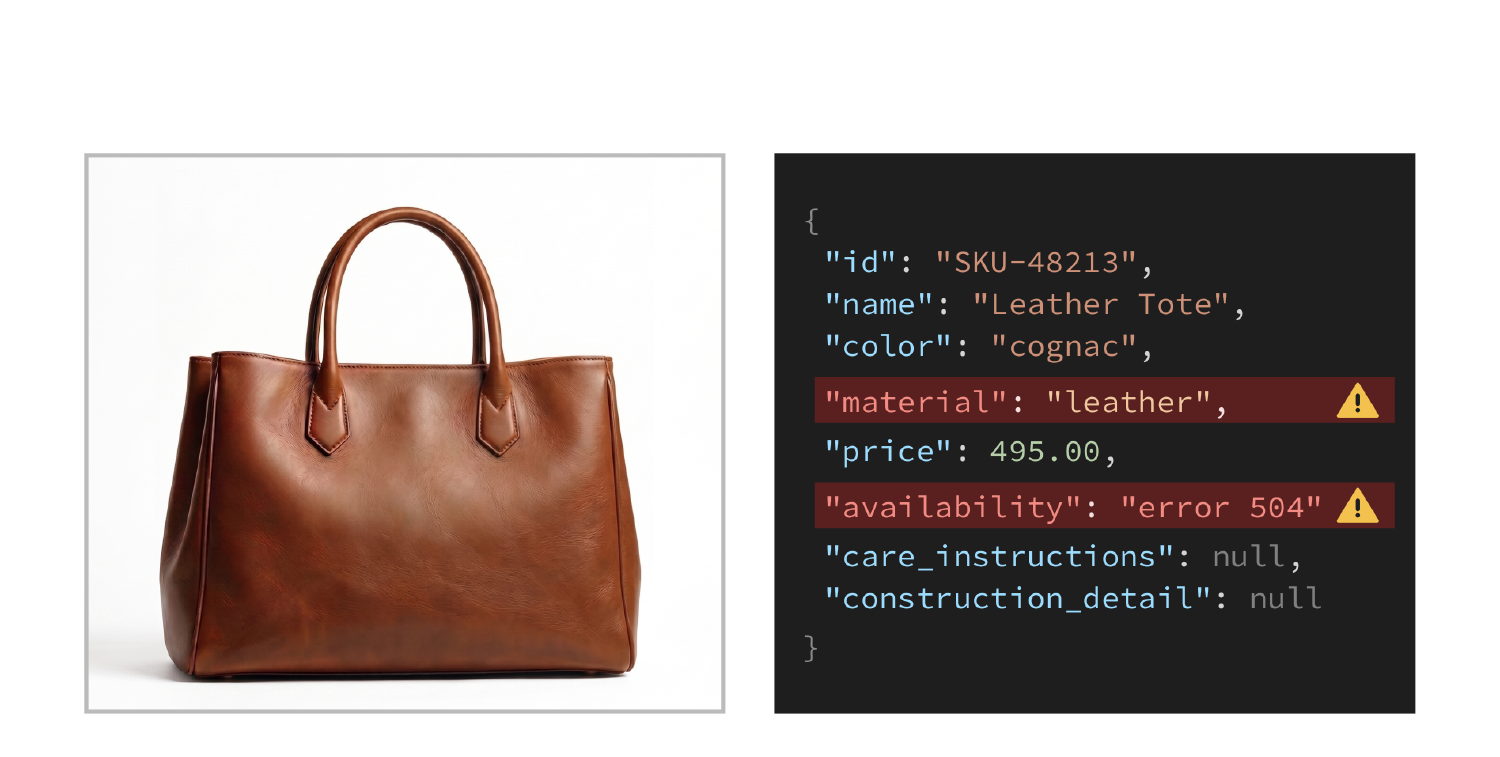
What happens to heritage, provenance and craft in a system with no field for them.

The Liability Vacuum
Who absorbs the cost when an agent gets it wrong, and why it is usually you.

The Sommelier Effect
The categories where human curation still wins, and how to decide which products to expose.

A seven-item checklist
Analytics, fraud, structured data, GEO, APIs, checkout protocols, policy surfaces. A Shopify path and a non-Shopify path for each.
If you run a Shopify store
and already keep structured Google Merchant feeds, most of the work is done. It starts with a ten-minute installation.
If you are on an enterprise stack
the framework is identical; the timelines are longer, and the work runs through your platform vendor and integrator.
If you have to convince a board
the checklist is the basis of the presentation: effort estimates, priority order, and the analytics and security gaps that make the budget case.
The two appendices: the vocabulary the book coins, and the agent-native publishing architecture that lies past the playbook.
The cover and the illustrations were generated with AI tools and are disclosed as such, here and in the book’s colophon.
Over 200 primary sources. The chapters describe the field as of March 2026; the epilogue and Appendix B run to early August — the month of publication.
The book is out in August 2026. Affero Press does not sell direct; when it is on sale, the retailers will be listed here and in the machine-readable catalogue.